
Adding a seat cushion seems simple: place it on your chair, sit down, and enjoy a more comfortable surface.
But there is one detail many people overlook.
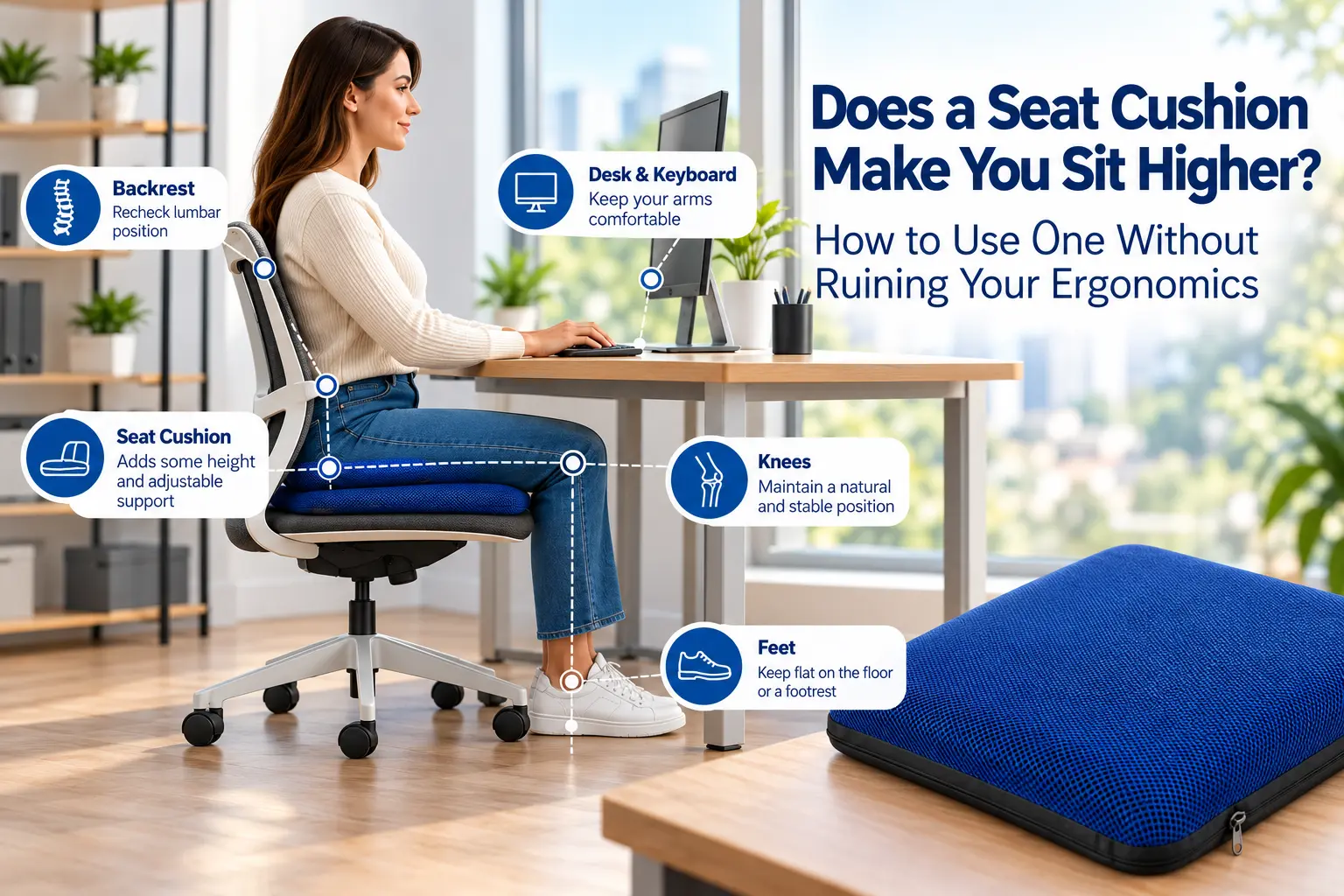
A seat cushion changes your sitting height.
Even a few centimeters can affect how your feet meet the floor, where your arms reach the desk, how your back meets the chair, and—in a vehicle—your relationship to the steering wheel and pedals.
That does not mean a seat cushion is a bad idea. It means the cushion should be treated as part of your seating setup rather than as an accessory that can be added without adjustment.
Here is how to use one more effectively.
Yes, a Seat Cushion Usually Makes You Sit Higher
Every cushion adds some height before you sit on it.
What matters is its loaded height—how thick it remains under your body weight.
A soft foam cushion may look thick but compress substantially when you sit. A firmer cushion may retain more of its original height.
An air cushion is different because its loaded height can change depending on how much air it contains.
That distinction matters. The useful question is not simply “How thick is this cushion?” but “Where does this cushion position me after I sit on it?”
Why Sitting Height Matters
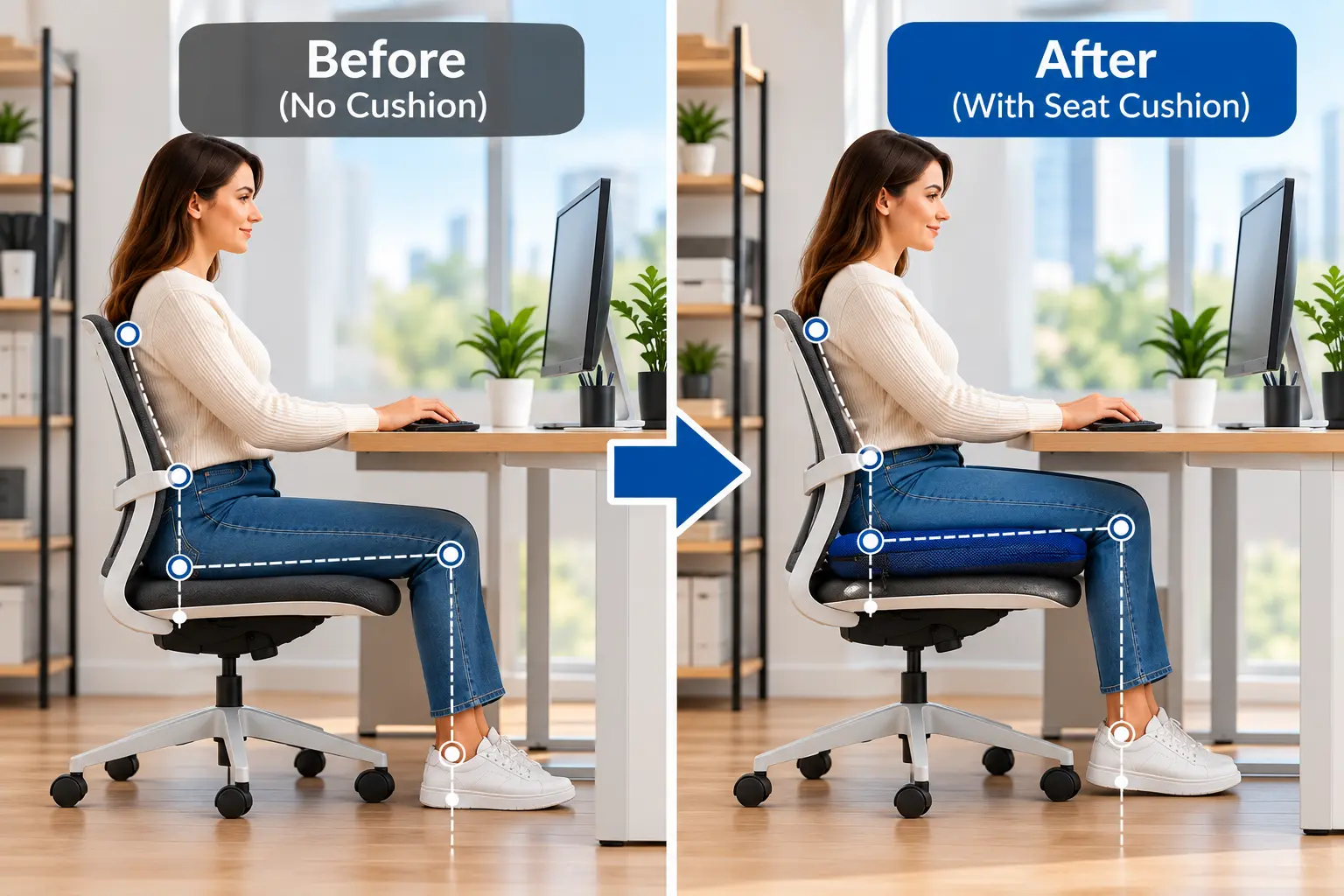
Your chair, desk and body form one system. Changing one part can affect the others.
Your Feet
After adding a cushion, check whether both feet still rest comfortably on the floor or foot support.
If your chair was already near its maximum comfortable height, adding a cushion may leave your feet less supported. In an office environment, lowering the chair or using an appropriate footrest may help restore the relationship between your legs and the floor.
Your Knees
Notice the position of your knees relative to your hips.
The goal is not to force your body into one mathematically “perfect” angle. People move throughout the day, and individual proportions vary. Instead, look for a position that feels stable and does not require you to perch on the front edge of the chair.
Your Desk and Keyboard
If a cushion raises you, your arms are now higher relative to the desk.
That can change your keyboard, mouse and armrest position. After adding a cushion to an office chair, sit normally and check whether you can use your keyboard without unnecessarily lifting or dropping your shoulders.
You may need to adjust the chair height, armrests or desk setup.
What Happens to the Backrest?
Raising the pelvis also changes where your back meets the chair.
A lumbar contour that previously aligned comfortably with your lower back may now contact a slightly different area. After adding a cushion, sit all the way back and reassess the chair rather than assuming the old settings remain correct.
If your chair has adjustable lumbar support, headrest or backrest height, small changes may improve the new seating position.
Seat Cushion Height in a Car Is Different
Vehicle seating requires additional care because the seat is part of a driving control system.
Adding a cushion can change your eye position, headroom, distance from the steering wheel, relationship to the pedals, position relative to the head restraint, and how the seat belt contacts your body.
After installing one, confirm that you can operate the vehicle normally and safely. Do not use a cushion if it interferes with seat controls, restraint systems, driving visibility, pedal operation, or your ability to maintain a stable driving position.
Why More Cushion Is Not Always Better
Consumers often associate a thicker cushion with greater comfort, but thickness alone tells you very little.
A thick cushion that dramatically changes your seating geometry may be less practical than a lower-profile cushion that provides the support you prefer. Likewise, a very soft cushion may compress so much that its advertised thickness becomes largely irrelevant once you sit on it.
This is why usable height, support and adjustability should be considered together.
Adjustable Air Adds Another Variable: You Can Change the Setup
A fixed foam cushion gives you the material characteristics chosen at the factory. An adjustable air cushion gives you another option.
By adding or releasing air, you can change the way the cushion responds under your weight. If you are unsure where to begin, our guide on how firm should a seat cushion be explains how to find a balanced level of adjustable air support.
AJ AIR CUSHION uses 27 interconnected air cells with a built-in press-to-inflate system. The design allows users to fine-tune the amount of air without carrying a separate pump. Learn more about AJ AIR CUSHION technology and the engineering behind the system.
This does not mean you should inflate the cushion as much as possible. More air can create a firmer feel and may affect your loaded sitting height.
Instead, begin moderately and adjust gradually. The objective is to find a level where the cushion feels supportive without unnecessarily changing your seating position.
How to Set Up a Seat Cushion on an Office Chair
Step 1: Place the Cushion Fully on the Seat
Center it on the chair and make sure it is stable. Avoid placing it partly over the front edge or against an uneven surface.
Step 2: Sit Before Making Judgments
Do not determine the correct setup by pressing the cushion with your hand. Your full body weight produces a different result. Sit normally for several minutes.
Step 3: Check Your Feet
Can they rest comfortably? If not, evaluate chair height or foot support.
Step 4: Check the Desk
Place your hands where you normally type. Notice whether adding the cushion has changed your relationship to the keyboard, mouse and armrests.
Step 5: Check the Backrest
Sit fully back and determine whether the lumbar region and backrest still feel appropriately positioned.
Step 6: Fine-Tune the Cushion
With an adjustable air cushion, add or release small amounts of air and reassess. Avoid chasing maximum inflation.
What About Different Chairs?
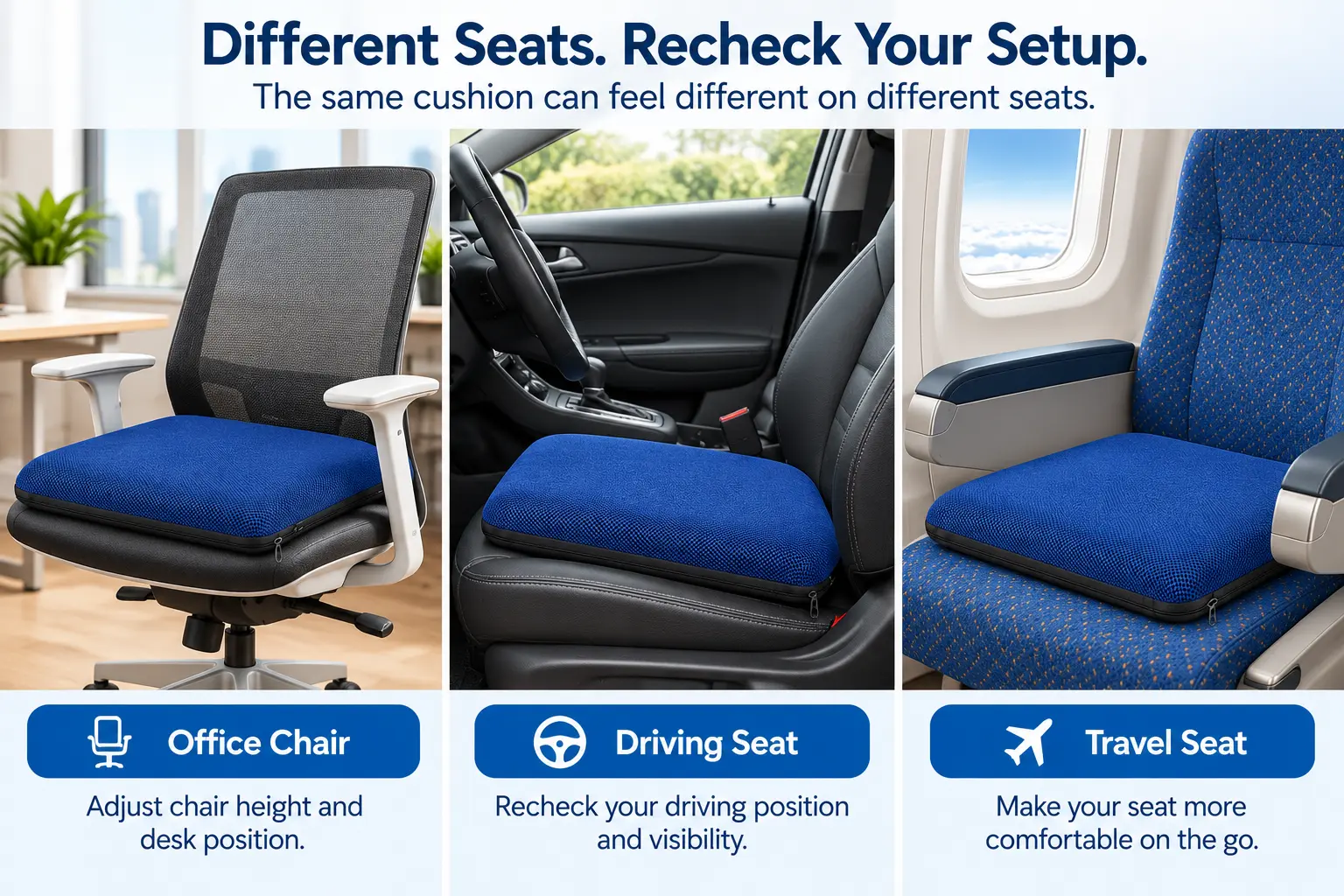
The same cushion can feel different on different seats.
A firm dining chair provides a very different foundation from a padded executive chair. A vehicle seat may already have substantial contouring. An airplane or waiting-room chair gives you little control over the underlying seat at all.
This is why one fixed cushion setting may not be ideal everywhere. For people who move a cushion between the office, car and travel environments, the ability to readjust it can be particularly practical.
Cushion Height and Breathability Are Connected Too
There is another factor worth considering: heat.
A cushion that allows excessive sinking can increase the amount of material contacting the body. Cover construction and airflow also matter during long sitting sessions.
If heat buildup is one of your concerns, our guide to choosing a breathable seat cushion explains how surface material, airflow and internal construction affect the sitting environment.
A Seat Cushion Should Work With Your Chair
The biggest mistake is expecting a cushion to correct an entire seating setup by itself.
A cushion cannot compensate for every problem with desk height, chair adjustment, driving position or prolonged inactivity.
If extended workdays are your main concern, see our guide to choosing the best seat cushion for sitting 8+ hours.
Instead, think of the cushion as one adjustable component. A useful sequence is:
- Place and center the cushion.
- Check your loaded sitting height.
- Confirm that your feet remain supported.
- Recheck desk height or vehicle controls.
- Reassess the backrest and lumbar position.
- Make a final air adjustment if needed.
Whenever you move the cushion to another chair, repeat the check. It only takes a minute, and it is more useful than assuming the same setup works everywhere.
Final Thoughts
So, does a seat cushion make you sit higher?
Yes—usually. But the amount that matters is the height that remains after you sit on it.
Instead of choosing a cushion based only on advertised thickness, consider how it changes your entire seating position.
Check your feet, knees, desk, backrest and—in a vehicle—your safe relationship to the controls and restraint systems.
An adjustable air cushion adds flexibility because you can fine-tune its inflation rather than accepting one fixed level of support.
The goal is not simply to add more material underneath you. It is to make your seat work better as a complete system.
AIR FOR BALANCE, JOY FOR LIFE.
Frequently Asked Questions
How much height does a seat cushion add?
It depends on the cushion’s construction and how much it compresses under your weight. Advertised unloaded thickness does not necessarily equal the height you experience while sitting.
Is a thick seat cushion better?
Not necessarily. Thickness is only one variable. Support, compression, chair geometry, stability and adjustability can be more important than maximum thickness.
Should I lower my office chair after adding a cushion?
You may need to. After adding the cushion, check whether your feet remain supported and whether your keyboard, desk and armrests are still comfortably positioned.
Can I use a seat cushion while driving?
A cushion can be used only when it allows you to maintain a safe driving position and does not interfere with seat belts, airbags, controls, pedals, visibility or other safety systems. Recheck the entire driving position after adding one.
Should an air seat cushion be fully inflated?
Not necessarily. Maximum inflation is not the goal. Start moderately and adjust gradually until you find an appropriate balance of support, firmness and sitting position.
Make Your Seat More Adaptable
Different chairs create different sitting positions. Explore AJ AIR CUSHION seat cushions with adjustable air support for office work, driving, travel and everyday seating.