
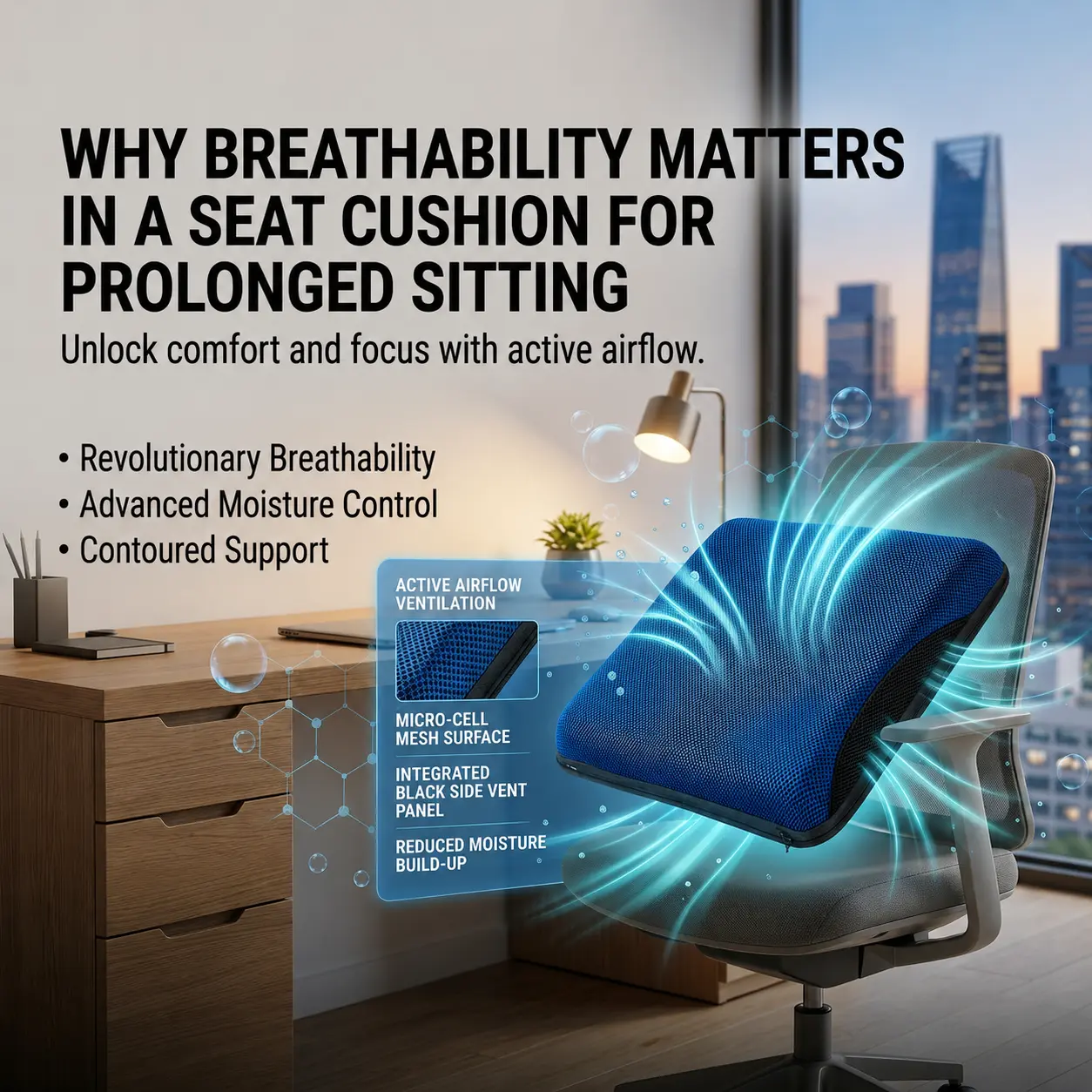
When choosing a seat cushion for prolonged sitting, most people focus first on softness, thickness or support. Breathability is often treated as a secondary feature—but it can make a noticeable difference in everyday comfort.
Whether you work at a desk, drive for extended periods, travel frequently or use a wheelchair, the area between your body and the seat can gradually become warm and humid. A breathable seat cushion is designed to improve airflow around this contact area and help create a more comfortable sitting environment.
Understanding how breathability works can help you choose a cushion that feels more suitable throughout the day.
What Does Breathability Mean in a Seat Cushion?
Breathability describes how effectively a cushion’s cover and internal construction allow air, heat and moisture to move.
A cushion does not need to feel cold to be breathable. Instead, its materials should avoid trapping excessive warmth against the body. The design should also provide pathways that allow air to circulate rather than remaining sealed inside dense layers.
Several factors influence breathability:
- The structure of the outer fabric
- The density and elasticity of the material
- The design of the cushion’s internal support layer
- The amount of body contact with the cushion
- Whether the cover can be removed and cleaned
A cushion that combines breathable surface materials with an open or segmented internal structure may offer better ventilation than one made entirely from dense, closed materials.
Why Heat and Moisture Build Up During Prolonged Sitting
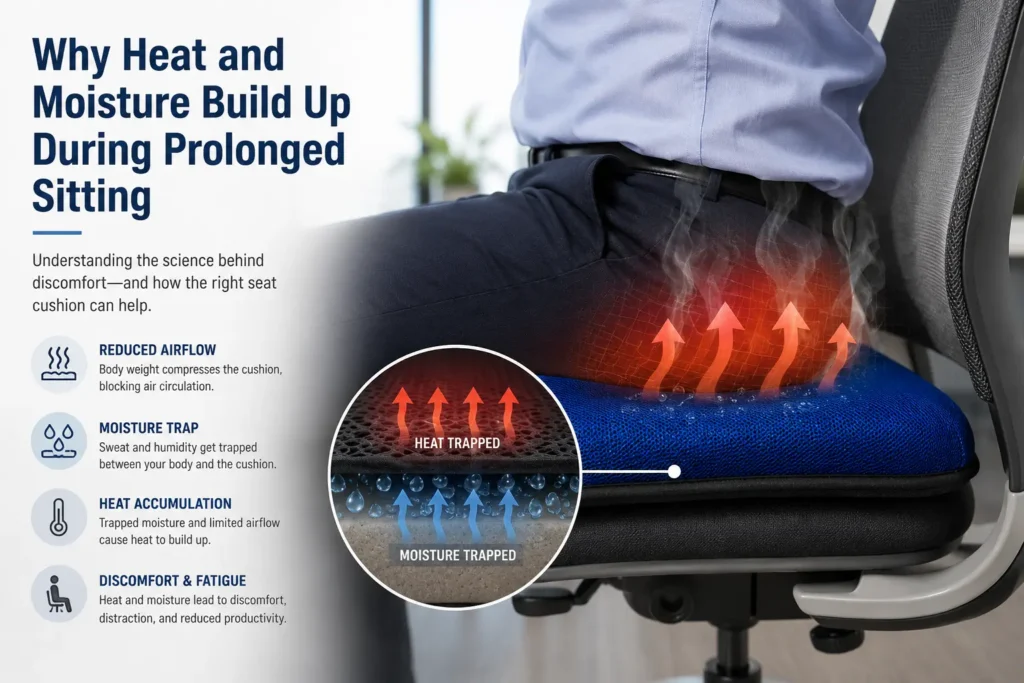
When you sit, part of your body remains in continuous contact with the seat. This contact limits natural airflow and can retain body heat.
Over time, warmth and moisture may accumulate between the user and the cushion. This can make the seat feel stuffy, sticky or uncomfortable, particularly in warm environments or during long periods of use.
Research examining cushion microclimates has found that temperature and moisture at the body–seat interface can change during continuous sitting. This is why heat and moisture management should be considered alongside support and pressure distribution when evaluating a cushion.
Breathability does not replace proper posture or regular movement, but it contributes to a more comfortable seating experience.
Breathable Materials Can Improve Everyday Comfort
The outer cover is the first layer in contact with the user, making its construction especially important.
3D Mesh
Three-dimensional mesh uses interconnected fibers to create a slightly raised and porous surface. The open structure allows air to move through the material more easily than through a tightly woven or non-porous cover.
A well-designed 3D mesh cover may help:
- Reduce the feeling of trapped warmth
- Allow moisture to dissipate more efficiently
- Maintain airflow around the seated area
- Provide a flexible surface that follows the cushion’s shape
Breathability will still depend on the complete cushion design. A ventilated cover placed over a completely solid internal layer may offer less airflow than a cushion with both a breathable cover and an air-based or segmented support structure.
Flexible Support Layers
The layer beneath the cover should be flexible enough to respond to movement without completely blocking airflow.
Highly compressed materials may feel supportive initially, but density alone does not guarantee long-term comfort. The ideal design balances support, resilience and ventilation.
Removable Covers
A removable cover makes routine cleaning and care easier. This is particularly useful for cushions used every day in offices, cars, wheelchairs or shared seating environments.
Always follow the manufacturer’s cleaning instructions, as incorrect washing or drying may affect the material’s elasticity or shape.
Breathability and Pressure Distribution Work Together
Breathability should not be evaluated separately from support.
A cushion may allow excellent airflow but still feel uncomfortable if it does not distribute seated pressure effectively. Likewise, a highly supportive cushion may become unpleasant during extended use if its materials retain too much heat.
A balanced seat cushion should provide:
- A breathable surface
- Stable support across the seated area
- Enough flexibility to respond to movement
- A suitable shape and size for the chair
- Materials that retain their structure during regular use
An interconnected air-cell structure can create individual support zones while allowing the cushion to respond as the user changes position. When combined with a breathable mesh cover, this type of design addresses both surface ventilation and adjustable support.
Why Adjustable Firmness Can Be Helpful
Comfort preferences vary considerably. A cushion that feels comfortable to one person may feel too firm or too soft to another.
Adjustable air support lets the user change the cushion’s firmness instead of relying on one fixed level. This can be especially practical when the cushion is used in different seating environments, such as:
- An office chair
- A dining or home chair
- A vehicle seat
- An airplane or train seat
- A wheelchair
- A gaming chair
AJ Air Cushion uses built-in inflate and deflate controls, allowing support to be adjusted directly from the cushion without carrying a separate pump. Its 27 connected air cells are designed to distribute air across the seated area, while the removable 3D mesh cover supports airflow and everyday care.
Learn more about the design in our Technology & Patents section.
What to Look for in a Breathable Seat Cushion
Before purchasing a seat cushion for prolonged sitting, consider the complete product rather than focusing on one feature.
1. An Open, Breathable Cover
Look for mesh or other porous materials that allow air to move through the surface.
2. A Responsive Internal Structure
The cushion should adapt to seated movement while maintaining stable support. Air cells or other segmented structures can respond differently from a single solid layer.
3. Adjustable Support
If possible, choose a cushion that allows you to fine-tune firmness. This makes it easier to accommodate personal comfort preferences and different chairs.
4. A Removable, Practical Cover
A removable cover simplifies cleaning and can help keep a frequently used cushion fresh.
5. A Stable Base
An anti-slip base can help keep the cushion positioned on the chair as you sit down, stand up or shift posture.
6. Appropriate Dimensions
Confirm that the cushion fits the seat without hanging over the edges or interfering with the backrest. It should also leave enough room for your feet to remain supported by the floor or a footrest.
For a broader purchasing checklist, read How to Choose an Ergonomic Seat Cushion for Long Hours of Sitting.
A Breathable Cushion Is Only Part of Better Sitting
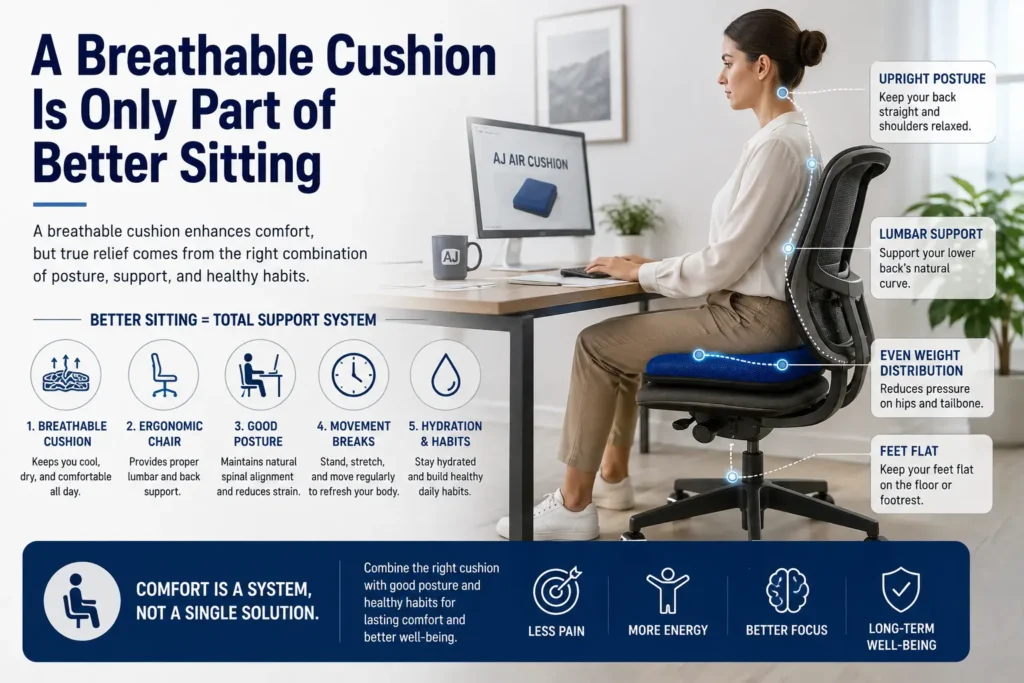
No cushion can replace healthy sitting habits.
The U.S. National Institute for Occupational Safety and Health recommends varying your posture and taking periodic breaks from prolonged sitting. Your chair, desk, monitor and foot position should also work together as part of an appropriately arranged workspace.
For better daily comfort:
- Change your sitting position periodically
- Stand or walk at regular intervals
- Keep both feet supported
- Adjust the chair and cushion together
- Avoid sitting on a cushion that raises you too high for the desk
- Stop using the cushion if it causes new or increased discomfort
A seat cushion should complement your chair and routine—not encourage you to remain seated without movement.
Who May Benefit from a Breathable Seat Cushion?
A breathable cushion can be useful for people who spend extended periods seated, including:
- Office and remote workers
- Professional and long-distance drivers
- Frequent travelers
- Wheelchair users
- Students
- Gamers
- Anyone using a firm or poorly ventilated chair
Individual needs differ, so comfort should always be evaluated personally. Anyone with a medical condition, reduced skin sensation, mobility limitation or pressure-related concern should seek advice from an appropriate healthcare professional before choosing specialized seating equipment.
Final Thoughts
Breathability is more than a surface detail. It affects how a cushion manages warmth and moisture throughout prolonged sitting.
The most practical designs combine breathable materials with responsive support, suitable dimensions, a stable base and easy maintenance. Adjustable firmness provides an additional advantage by allowing the cushion to be adapted to different users, chairs and daily activities.
When evaluating a seat cushion, look beyond initial softness. Consider how the materials, airflow and internal structure will work together after hours of everyday use.
Explore AJ Air Cushion products and compare breathable 3D mesh designs with adjustable air support for work, driving, travel and everyday seating.