
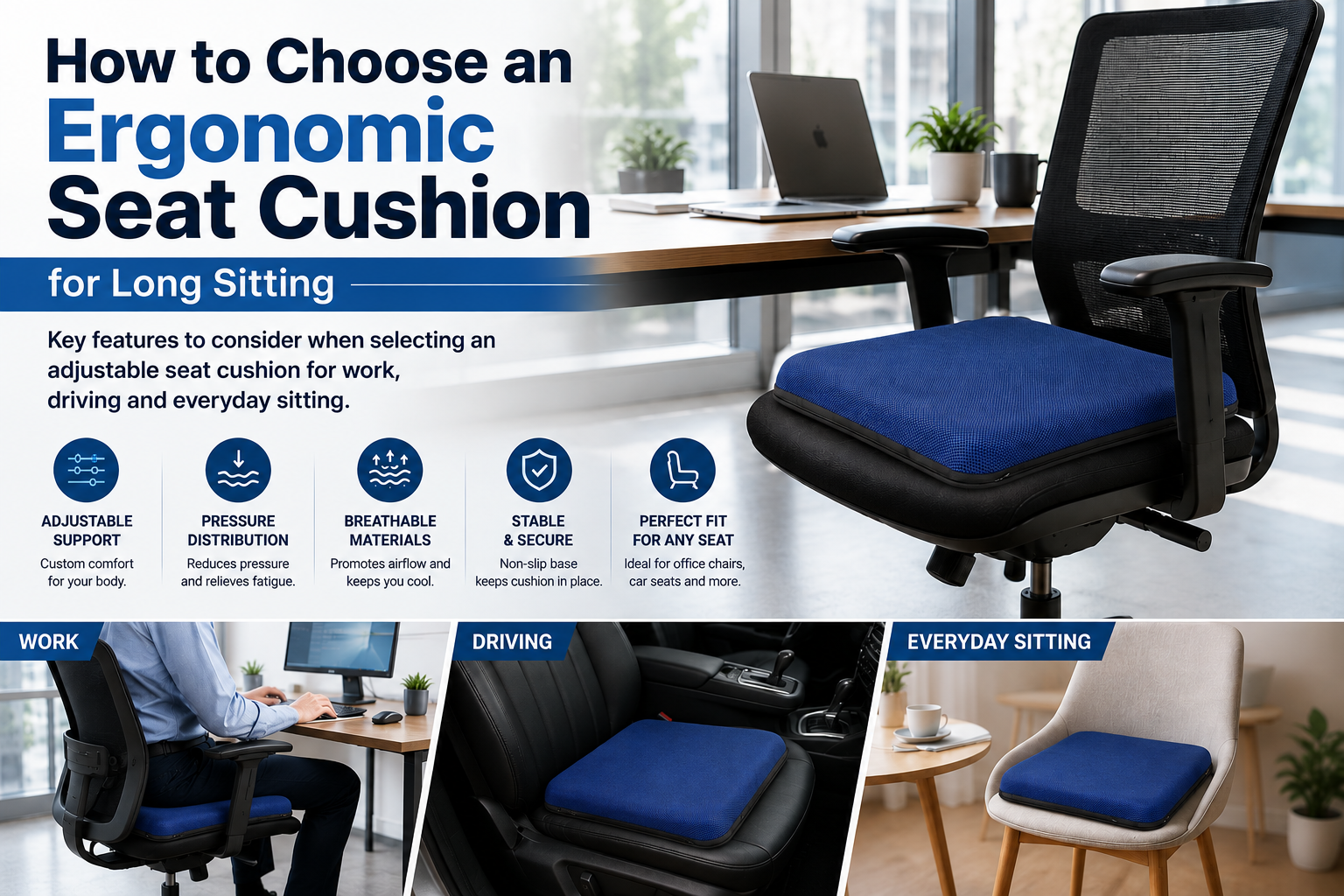
Spending hours in an office chair, car seat or wheelchair can make even a well-designed seat feel uncomfortable over time. A seat cushion can improve everyday sitting comfort, but choosing the right one involves more than simply finding the softest option.
A useful ergonomic seat cushion should support your body consistently, adapt to different sitting situations and remain comfortable throughout extended use. This guide explains the most important features to consider before choosing a cushion for long hours of sitting.
Why the Right Seat Cushion Matters
When you remain seated for a long time, pressure can become concentrated around specific contact points. People also shift position throughout the day, which means a cushion must respond to changing weight distribution instead of supporting only one fixed posture.
An effective seat cushion should help:
- Distribute sitting pressure more evenly
- Provide stable support without feeling excessively rigid
- Reduce heat buildup around the seating surface
- Adapt to different chairs and sitting positions
- Maintain its shape during extended use
A cushion cannot replace regular movement, correct chair adjustment or professional medical care. However, it can be a practical part of a more comfortable sitting environment.
1. Look for Adjustable Support
Every person has different comfort preferences. Body weight, chair design, sitting position and intended use can all affect how firm a cushion feels.
A fixed-density cushion offers only one level of support. If it feels too firm or too soft, there may be no practical way to adjust it. An adjustable air seat cushion allows the user to add or release air until the cushion reaches a more suitable level of firmness.
This can be especially useful when the same cushion is used in different locations, such as:
- An office chair
- A car or truck seat
- A dining or home chair
- A wheelchair
- A travel seat
When comparing adjustable cushions, check whether adjustment requires a separate pump. A built-in press system is usually more convenient because the cushion can be adjusted without carrying additional equipment.
2. Consider How the Cushion Distributes Pressure
Softness alone does not determine comfort. A cushion that compresses heavily in the center may feel soft at first but provide less consistent support during prolonged sitting.
Look for a design that spreads support across the seating surface. Connected air cells can respond as the user changes position, allowing air to move between different areas of the cushion.
The AJ Air Cushion uses 27 connected air cells designed to provide balanced air support across the cushion. Its adjustable structure lets users fine-tune firmness while seated, making it suitable for changing daily sitting needs.
Pressure distribution should be described carefully. A consumer seat cushion may support everyday comfort, but it should not be presented as a treatment or guaranteed solution for back pain, sciatica or other medical conditions.
3. Choose Breathable Surface Materials
Heat and moisture buildup can make prolonged sitting uncomfortable. This is especially noticeable during warm weather, long drives or extended periods of office work.
A breathable cushion cover allows air to move more freely around the seating surface. Three-dimensional mesh can create additional space for airflow compared with a dense, non-breathable fabric.
When evaluating the cover, consider whether it is:
- Made from breathable material
- Removable for easier care
- Flexible enough to move with the cushion
- Durable enough for regular use
- Comfortable against everyday clothing
The AJ Air Cushion features a removable breathable 3D mesh cover designed for airflow and practical daily care.
4. Check Stability and Anti-Slip Design
A cushion should remain positioned on the chair as the user sits down, stands up or shifts posture. Constant movement can be distracting and may reduce the benefit of the cushion’s support structure.
Look for an anti-slip base that adds grip without damaging the chair surface. Silicone anti-slip dots are commonly used to help keep a cushion securely positioned.
The cushion should still be placed on a stable, appropriately sized chair. If the seating surface is much smaller than the cushion or has an unusually curved shape, check the fit carefully before regular use.

5. Make Sure the Cushion Fits Your Seat
Before purchasing, compare the product dimensions with the usable seating area of your chair. Measure the width and depth of the seat rather than relying only on its overall external dimensions.
A suitable cushion should:
- Sit flat on the seating surface
- Avoid blocking important chair controls
- Leave enough space for a comfortable sitting position
- Remain stable without folding at the edges
- Fit the intended office, vehicle or mobility seat
Also check the cushion’s height when inflated. Adding too much height may change how your feet reach the floor or how your back contacts the chair.
After placing a cushion on an office chair, review the chair’s height, backrest and armrest settings. Your feet should remain comfortably supported, and the cushion should not force you too far forward.
6. Think About Where You Will Use It
The best cushion for one setting may not be ideal for another. Consider your primary use before making a decision.
Office Work
For desk work, prioritize breathable materials, stable support and a size that fits your office chair. Adjustable firmness can be useful when your sitting time changes from day to day.
Driving
A driving cushion should remain stable and must not interfere with seat controls, seat belts or safe vehicle operation. Always confirm that the added height allows a clear view and comfortable access to the pedals.
Travel
For travel, weight and portability become more important. A cushion that does not require a separate pump is easier to carry and adjust away from home.
Wheelchairs and Mobility Seating
Fit and stability require particular attention. A consumer cushion should not replace a medically prescribed wheelchair cushion. Anyone with reduced sensation, skin-integrity concerns or specific clinical needs should consult an appropriate healthcare professional.
7. Avoid Choosing by Softness Alone
A cushion that feels extremely soft during a short test may compress too much during longer use. Conversely, a very firm cushion may not adapt well to different sitting positions.
The goal is balanced, responsive support. Consider whether the cushion:
- Allows firmness adjustment
- Returns to its intended shape
- Supports different areas of the seating surface
- Remains stable as you move
- Feels comfortable after more than a few minutes
An adjustable cushion makes it easier to experiment with different firmness levels instead of being limited to a single factory-set feel.
8. Review Care and Durability
A seat cushion used every day should be easy to maintain. Check the care instructions before washing or removing any component.
Useful everyday features include:
- A removable outer cover
- Durable seams and edge binding
- An abrasion-resistant seating surface
- A stable anti-slip base
- Clearly marked inflate and deflate controls
Do not puncture, overinflate or expose an air cushion to excessive heat. Follow the manufacturer’s instructions for cleaning and storage.
A Practical Checklist
Before choosing an ergonomic seat cushion for long sitting, ask:
- Can the firmness be adjusted?
- Does the cushion distribute support across the seating surface?
- Is the cover breathable and removable?
- Does the base help prevent sliding?
- Will it fit the intended chair?
- Can it be adjusted without a separate pump?
- Is it portable enough for the intended use?
- Are the product claims realistic and clearly explained?
If a cushion meets these requirements, it is more likely to remain useful across office work, driving, travel and everyday seating.
Find Support That Adapts to You
Comfort needs can change throughout the day. An adjustable air cushion provides more flexibility than a fixed-support design because users can add or release air according to their seating environment and personal preference.
The AJ Air Cushion combines 27 connected air cells, built-in press controls, a removable breathable 3D mesh cover and an anti-slip silicone base. It is designed for people who spend long hours sitting and want practical, adjustable support for different seats.
Explore AJ Air Cushion products or learn more about the design on our Technology & Patents page.
Frequently Asked Questions
Is a soft or firm seat cushion better for long sitting?
There is no single firmness level that works for everyone. The most suitable level depends on the user, chair and sitting situation. An adjustable cushion allows you to fine-tune the support instead of choosing one fixed density.
Can I use the same seat cushion in an office and a car?
Yes, provided the cushion fits both seats and does not interfere with safe driving, seat controls or seat-belt positioning. Always check your seating height and access to the pedals after adding a cushion.
Why is a breathable cover important?
A breathable cover supports airflow around the seating surface and can reduce the uncomfortable buildup of heat and moisture during extended use.
How often should I move when sitting for long periods?
A seat cushion can improve everyday comfort, but it does not replace movement. Change position regularly and take appropriate standing or movement breaks whenever your work, travel or health circumstances allow.