
In the modern digital era, the chair has become our most constant companion. Whether it’s an 8-hour workday, a long commute, or lounging on the sofa, the physical cost of “sitting still” is staggering. Medical experts now warn that chronic inactivity is a primary driver behind the global rise in musculoskeletal disorders and metabolic decline.
As seen in our analysis of common lifestyle scenarios, the pain in your neck, back, and joints isn’t just a temporary nuisance—it is a warning sign of structural damage.
1. Structural Collapse: The Impact on Your Spine
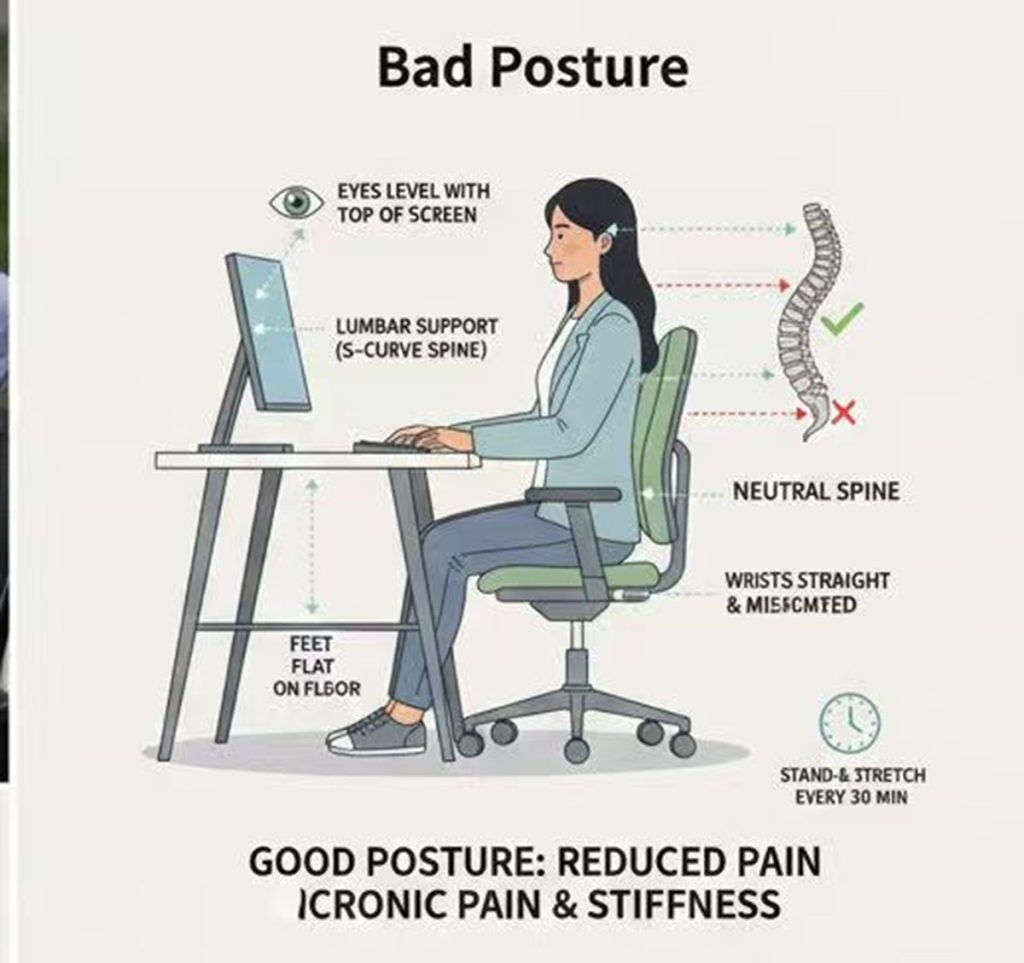
Sitting forces the spine into an unnatural position, often leading to a “C-shape” curve rather than its natural “S-shape.”
Lumbar Disc Compression
When you sit with a slouched back, the pressure on your lumbar discs increases by up to 200% compared to standing. Over time, this leads to herniated discs and chronic lower back pain.
The “Tech Neck” Phenomenon
Leaning toward a laptop or steering wheel causes the head to shift forward. This places immense strain on the cervical spine, leading to tension headaches and permanent postural distortion.
2. Muscular Imbalance: The “Shutting Down” of Your Core
Your body is designed for movement. When you stay seated, your primary support muscles begin to atrophy.
Gluteal Amnesia and Tight Hip Flexors
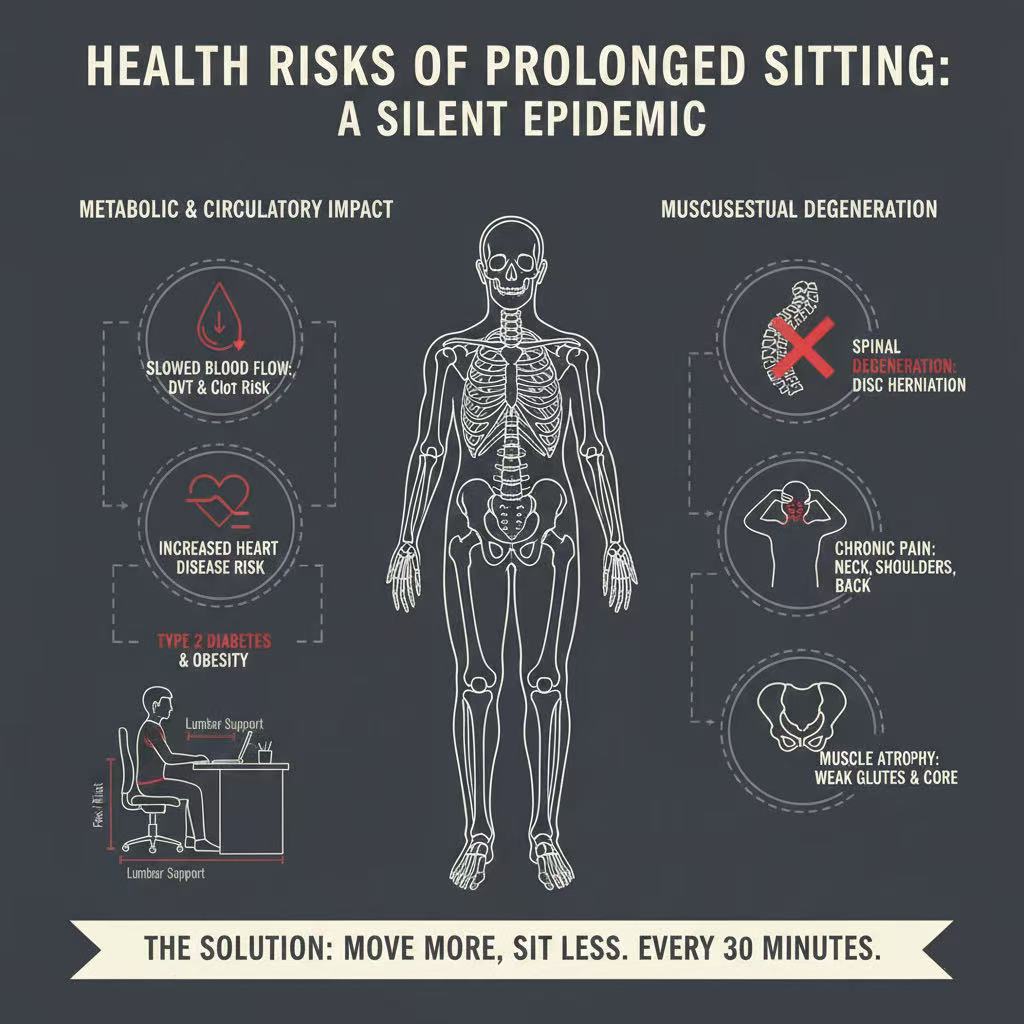
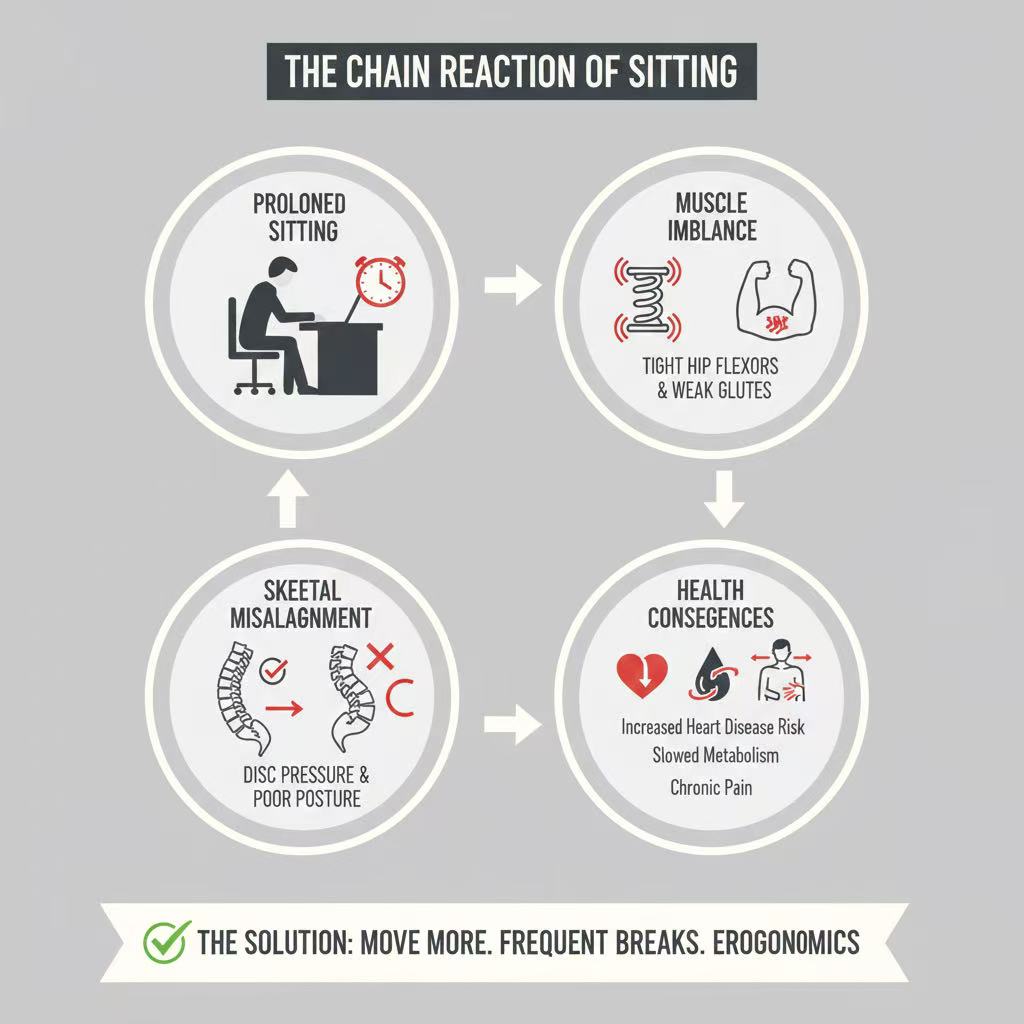
Prolonged sitting keeps the hip flexors in a shortened state, making them tight and painful. Simultaneously, the gluteal muscles (your body’s powerhouse) “shut down,” causing the lower back to take over the workload and eventually fail.
Core Instability
Without active engagement, your abdominal muscles weaken, leaving your spine vulnerable to every twist and turn.
3. Beyond the Bone: The Systematic Hazards of Inactivity
The comparison “Sitting is the New Smoking” stems from the profound metabolic damage caused by sedentary behavior.
Metabolic Shutdown
Within 60 minutes of sitting, the production of enzymes that burn fat drops by as much as 90%. This leads to increased risks of Type 2 Diabetes and Obesity.

Cardiovascular Decline
Inactivity slows blood flow, allowing fatty acids to clog the heart more easily. Research links excessive sitting to a significantly higher risk of heart disease and deep vein thrombosis (DVT).
4. The Solution: Build Your Best Defense
To reverse the damage, you must transition from a static lifestyle to a dynamic one.
The Ergonomic Blueprint
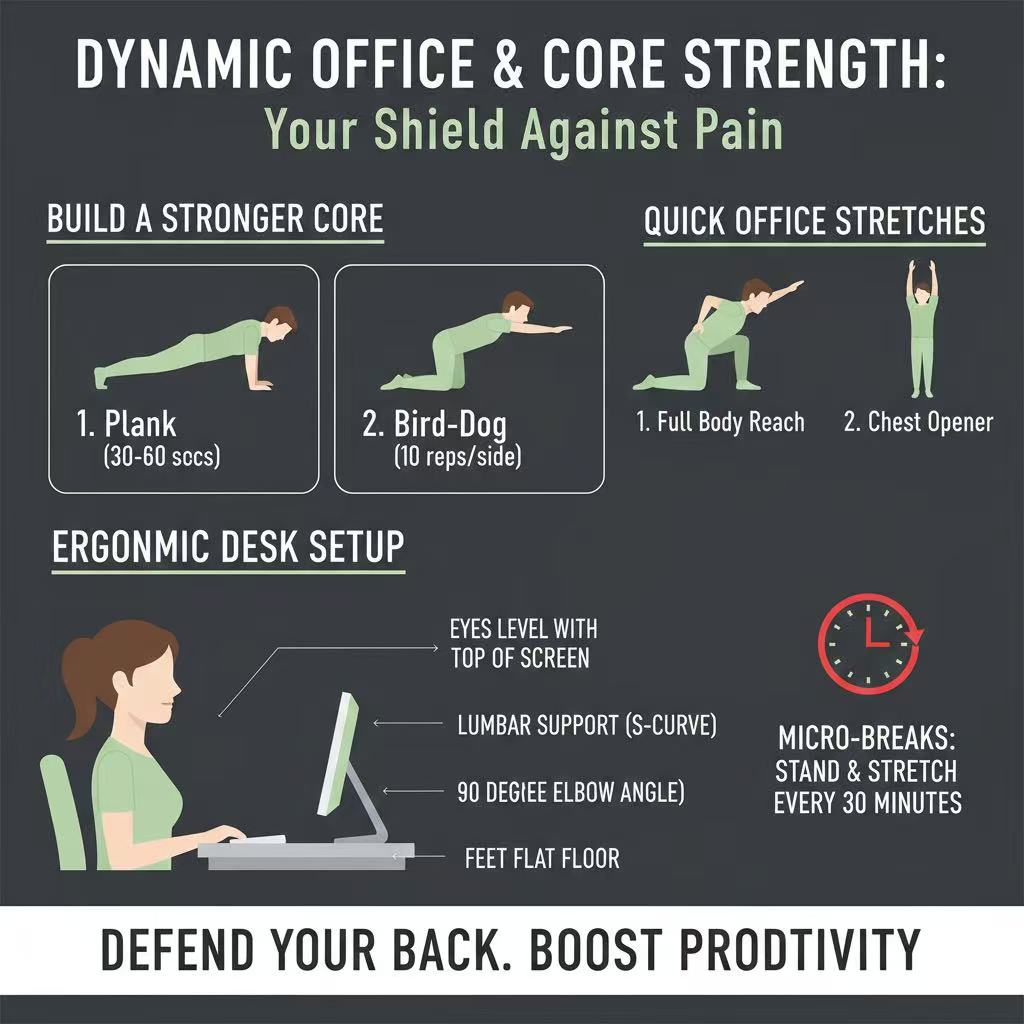
Ensure your workspace is your ally, not your enemy. Keep your monitor at eye level, elbows at 90 degrees, and use a chair with dedicated lumbar support.
Movement Snacks & Core Strengthening
As highlighted in our guide, exercises like the Plank and Bird-Dog are essential. They “re-wake” your core and provide the muscular armor your back needs to resist the pressures of sitting.
Conclusion
Your chair shouldn’t be a health hazard. By understanding the risks of a sedentary lifestyle and implementing ergonomic corrections, you can reclaim your mobility and longevity. Stop sitting, start living.