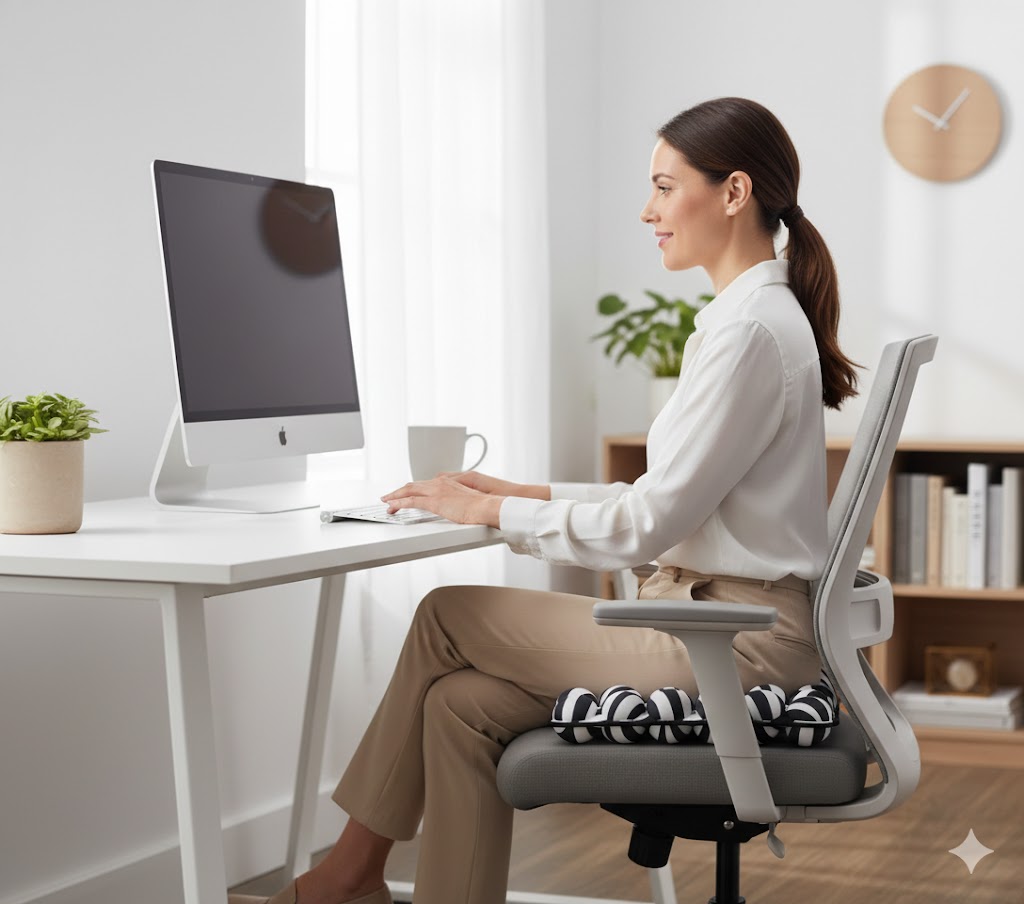

1. The Invisible Health Crisis: Why Sitting is the New Smoking
For the modern professional, the desk is the primary battlefield. However, staying seated for 8+ hours a day is unnatural for the human body. Research indicates that prolonged sitting increases the risk of chronic issues, leading to what experts now call the “Sitting Disease.”
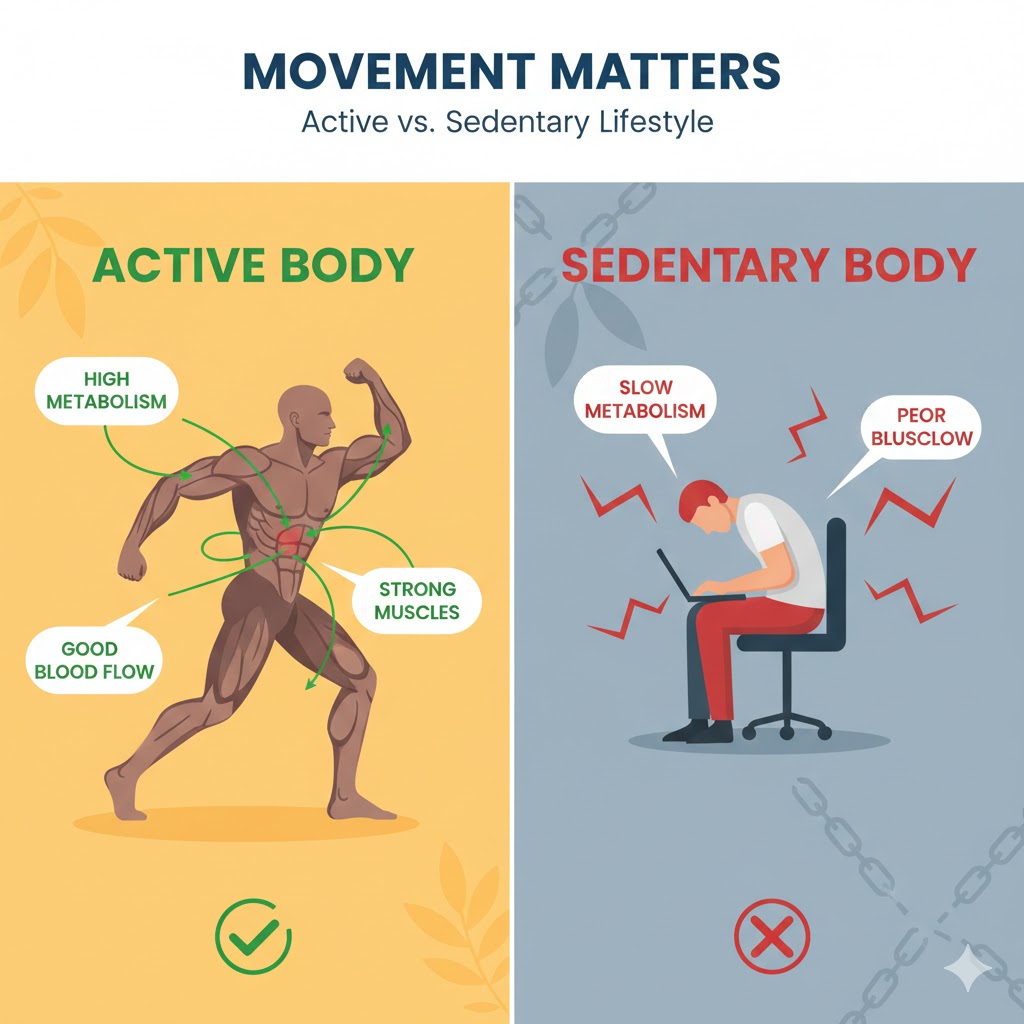
2. 4 Critical Pain Points of Long-Term Sitting
I. Musculoskeletal Misalignment
When you sit, your hip flexors tighten, and your glutes “shut down.” This leads to:
- Lower Back Compression: Sitting increases pressure on your spinal discs by up to 90% compared to standing.
- Tech Neck (Forward Head Posture): Staring at monitors strains the cervical spine, causing chronic headaches and shoulder tension.
II. Poor Circulation & Edema
Gravity causes blood to pool in the lower extremities when muscles aren’t contracting. This results in swollen ankles and, in severe cases, deep vein thrombosis (DVT).
III. “Dead Butt” Syndrome (Gluteal Amnesia)
Constant pressure on the buttocks compresses the soft tissue, leading to numbness and weakened muscles that fail to support your pelvis correctly.
IV. Reduced Mental Clarity
Physical stiffness leads to mental fatigue. Lack of movement reduces oxygenated blood flow to the brain, causing the mid-afternoon “brain fog.”
3. The Solution: Creating a Dynamic Ergonomic Ecosystem
To combat these pains, you need a multi-layered approach that combines habit with high-quality support.
Step 1: The 20-8-2 Rule
Aim to sit for 20 minutes, stand for 8 minutes, and move/stretch for at least 2 minutes every half hour.
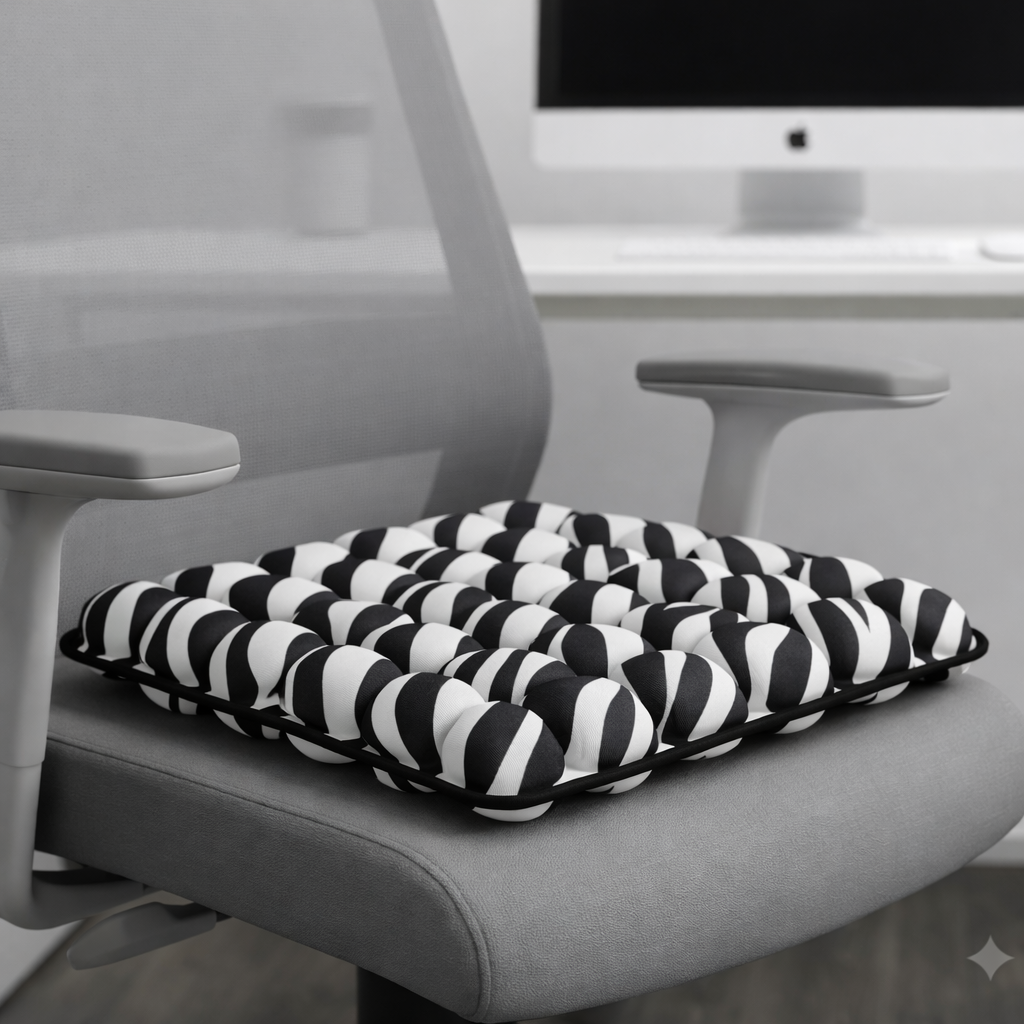
Step 2: Strategic Support (The Zebra Pattern Air Cushion)
Standard foam cushions lose their shape and fail to distribute weight. A zonal air-cell cushion (like the Zebra Pattern series) uses air-convection technology to:
- Disperse Pressure: Air flows between cells to ensure no single point (like the tailbone) bears all the weight.
- Encourage Micro-movements: The fluid nature of air keeps your core slightly engaged, preventing muscle stagnation.
Step 3: Desktop Ergonomics
Ensure your monitor is at eye level and your elbows are at a 90-degree angle. Your feet should always be flat on the floor.
4. Comparison Table: Foam vs. Air Support
| Feature | Standard Foam Cushion | Advanced Air-Cell Cushion |
| Pressure Distribution | Uneven (Creates hot spots) | Even (Fluid air convection) |
| Durability | Sags over time | Retains shape via air pressure |
| Breathability | Traps heat | High (Air gaps prevent sweating) |
| Spine Alignment | Static | Dynamic (Adapts to movement) |
5. Conclusion: Air for Balance, Joy for Life
Your health is your most valuable asset. While you cannot always change your workload, you can change how you support your body during those hours. Investing in an Air-Cell Support System is not just about comfort—it’s about long-term spinal health.